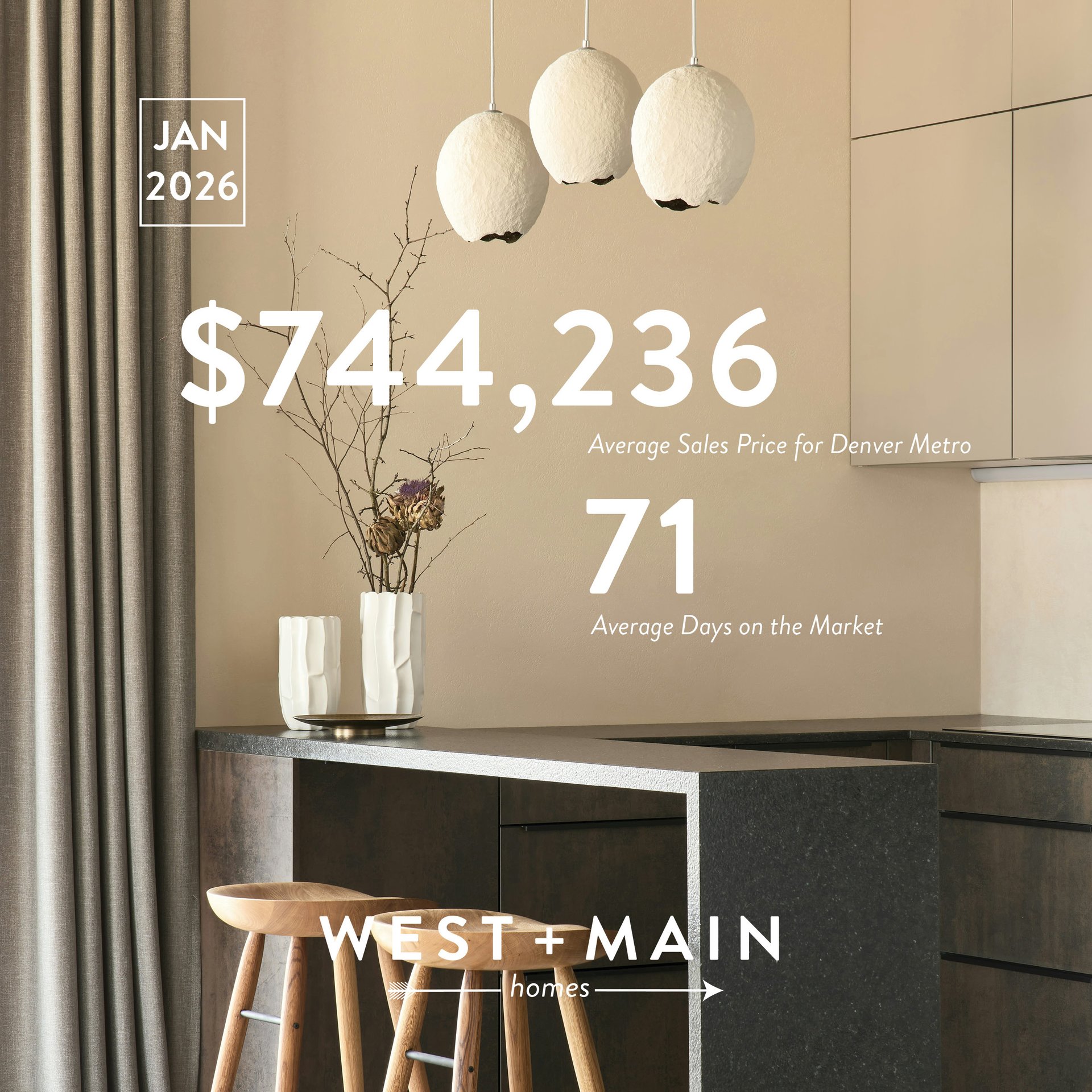
The Denver Metro area's real estate market enters 2026 carrying the weight of three years of frustratingly flat performance, leaving both buyers and sellers in sustained uncertainty. After the pandemic-era frenzy gave way to stagnation in 2023, the market has remained stubbornly sideways, creating fatigue on both sides of transactions. This extended period of stasis has fundamentally shifted expectations. As 2026 unfolds, buyers and sellers are desperate for signals of directional movement, whether upward momentum that rewards homeowners or downward pressure that creates genuine buying opportunities, making this year potentially pivotal for breaking the market's three-year holding pattern.
December 2025 was a month when many took time to reset. Sellers withdrew listings from the market and buyers reevaluated their plans and expectations. Only 1,919 homes sold in January, reflecting the diminished activity in December. Looking at historical data back to January 2008, there have only been two other months with fewer than 2,000 homes sold: January 2010 and January 2011, both post-financial crisis years.
While December was a time to recalibrate, both buyers and sellers were eager to start in 2026, with showing requests and new inventory entering the market early. January saw a 152.55 percent increase in new listings month-over-month. Many of these were listings withdrawn from the market in November and December, with plans to relist after the first of the year. Pending sales for detached homes were up 48.19 percent from December, while attached homes saw a much-welcomed increase of 43.79 percent month-over-month, a positive sign of increased buyer activity.
The median sale price for detached homes decreased 1.60 percent month-over-month and 3.61 percent year-over-year. Attached homes saw a slight increase of 1.30 percent month-over-month and a decrease of 2.01 percent year-over-year. December and January are typically the low points in the year for home sale prices. The average close-price-to-list-price ratio was 97.94 percent, down slightly from 98.23 percent in December and 98.50 percent in January 2025. Sellers who had been on the market longer than they were comfortable with were more willing to negotiate on price than in recent years.
Active inventory continues to give buyers options. At the end of January, 8,228 active listings were on the market, up 8.16 percent from the end of December and up 7.02 percent from January 2025. The market historically experiences an average decrease of 3.28 percent in active listings from December to January. An increase of 8.16 percent represents increased seller activity.
The Denver Metro area typically has very predictable seasonality. Even though the last three years have been essentially flat in both home sales and the median sale price, seasonality is still apparent. This year's unseasonably warm winter may accelerate the traditional spring market, creating an earlier window of peak buyer activity that sellers should consider when timing their listings. Buyers have more options than in recent years, but continue to navigate affordability challenges with elevated interest rates and home prices.
Major changes in market conditions are not expected in the near future, so rather than waiting for dramatic market shifts, both buyers and sellers in 2026 may find the greatest advantage comes from acting decisively when personal timing and financial readiness align.
Learn more about the market from the Denver Metro Association of Realtors.