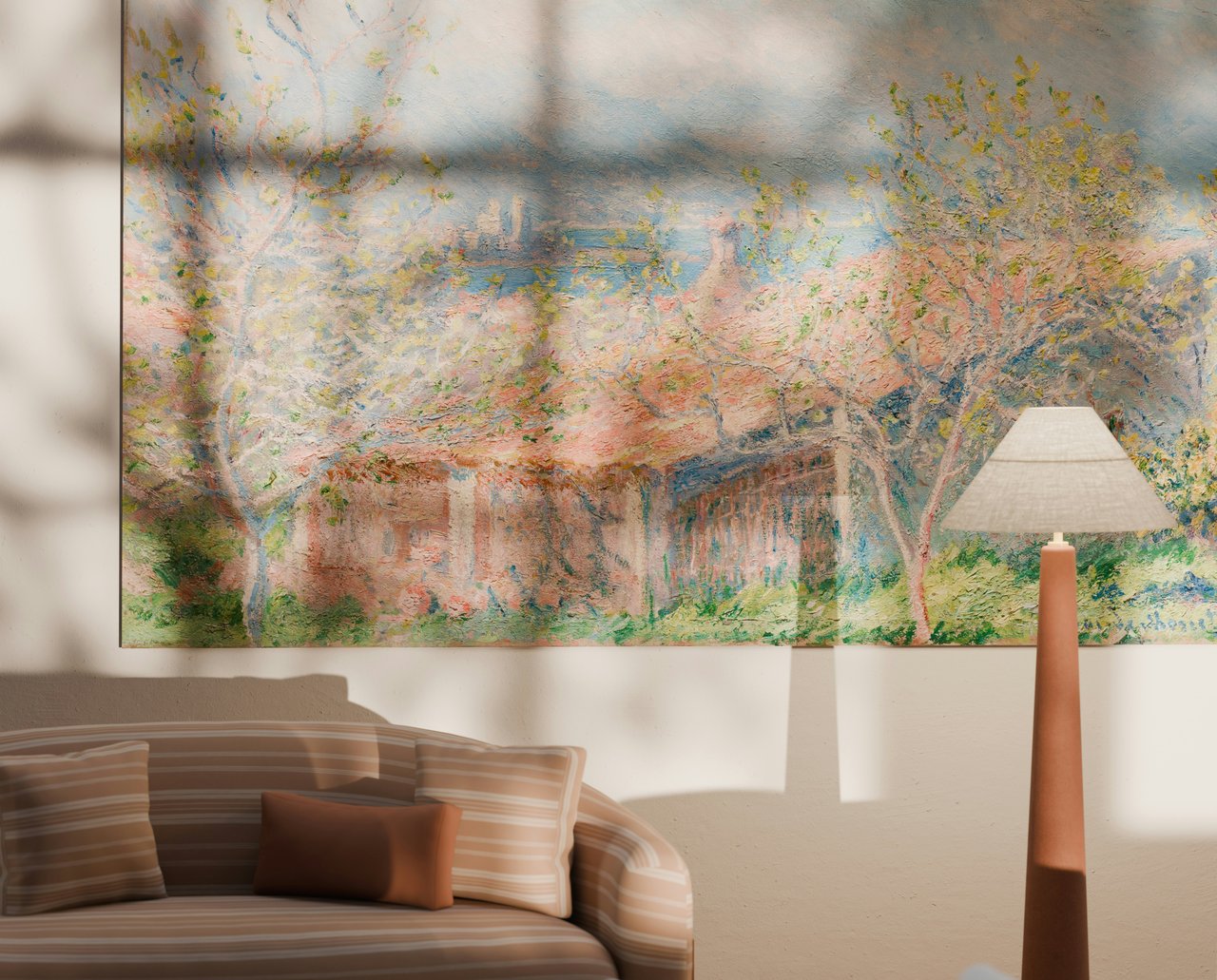
Here’s a fun fact for your next party: Murals are considered the oldest art form in the world, dating all the way back to prehistoric eras. Way back then, people created primitive murals in caves and on random rock walls, and over time this art form evolved into intricate, high-brow artistic expression. Zoom forward to today, and murals are still wholly embraced. Some might even say we’re in the midst of a mural revival.
A Modern-Day Mural Resurgence
From hand-painted scenes decorating walls at French estates to the frescoed ceilings of Roman palaces to intricate ink-painted screens in Japanese homes, murals have long told stories, celebrated landscapes, and mirrored architecture. Eventually, “they became a defining feature of Chinoiserie-inspired interiors before evolving into the romantic panoramic wallpapers that spread throughout Europe and eventually America,” says interior designer Avery Carter.
With today’s maximalist boom, it’s no surprise murals are making a notable comeback. Heather Fujikawa, principal designer and owner of House Sprucing, says that while she’s been incorporating murals into her clients’ homes for over a decade—largely inspired by her love for European-inspired design—homeowners increasingly desire more immersive, personalized spaces. Murals are helping them achieve this.
“One of the things I find most magical about murals is that they become part of a home’s story,” Fujikawa says. “Unlike a piece of art that can be removed, packed up, or sold, a mural is created to live with the architecture. It becomes part of the home’s heritage and identity, something that is meant to be experienced for generations.”
Carter says this modern-day mural movement is partially inspired by the past, but perhaps more so an evolution of the art.
“While they reference traditional scenic papers, the color palettes, scale, and hand of the artistry feel much more current,” Carter explains. “In my work, I tend to gravitate toward softer, more painterly interpretations rather than highly literal scenes.”
For example, she loves looser watercolor-inspired scenic murals in bedrooms to help create a calming atmosphere, while oversized botanical murals add some drama to a dining room. And in children’s spaces, Carter’s been incorporating whimsical illustrated landscapes and playful scenes that spark imagination.
Ways to Weave Murals Into Your Home
The beauty of murals is that you can put them anywhere. Here’s some designer inspiration to get your creative wheels turning.
In a Dining Space
Whether your home has a formal dining room or simply a dedicated corner for meals, the space instantly comes to life with a beautiful mural. In this design by Sarah Scales Design Studio, the palette and materials echo the existing space so it blends into the home. Scales says, “If you’re drawn to a wider range of color in a room, a mural is often a better path there than wallpaper or a bold pattern. You can move through several tones on one wall without it ever feeling busy or overwhelming.”
Behind a Headboard
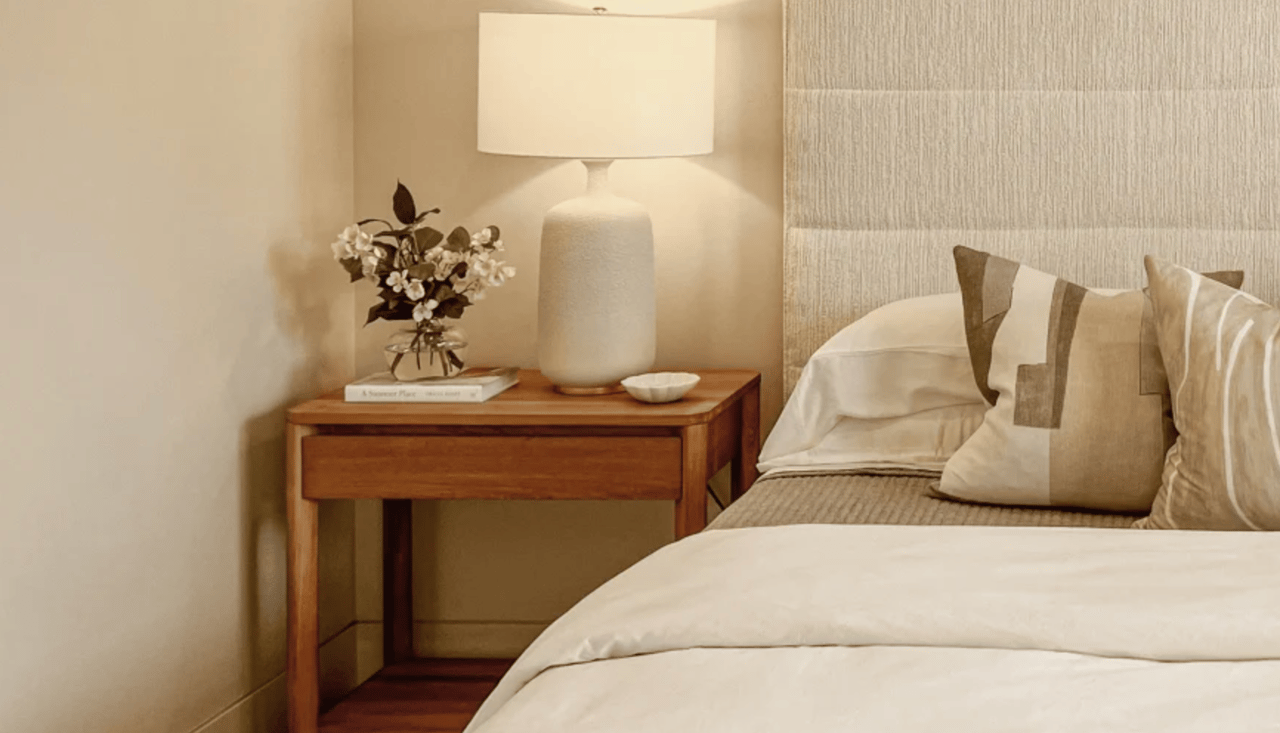
One of Fujikawa’s favorite places to use a mural is behind the headboard in a primary bedroom. “It instantly creates a beautiful focal point and adds another layer of interest without requiring additional artwork,” she explains. “I especially love subtle murals in soft beige, taupe, and tonal neutrals.” She explains this palette adds subtle texture, tells a story, and creates depth without overwhelming a space where you want to relax.
As a Coffee or Wine Station Backdrop
In lieu of color drenching or a plain white wall, consider making a mural the backdrop for a coffee or wine station. No matter how large or small it is, it’s a quick way to infuse personality and character. Look closely and you’ll see that this mural is actually a set of tiles inspired by Kyoto, Japan.
In a Powder Bathroom
Another great place to put a mural is in a powder bathroom. “Since it’s a smaller space, you can create an incredible impact with relatively little material,” Fujikawa explains. “Whether the mural extends from floor to ceiling or is paired with tile or wainscoting, it transforms an often overlooked room into one of the most memorable spaces in the home.
Along a Corridor
A mural painted along a corridor, hallway, or even stairwell has a European flair and invites passersby to linger longer. Carter says, “You quite literally feel as though you’re on a journey as you move through the home. If budget allows, consider a three-dimensional plaster mural for incredible texture and depth.” She recommends keeping the palette subtle and monochromatic.
In Corners and Nooks
Murals can quickly transform teeny spaces without much personality into a place you can’t wait to spend time in. Think reading nooks, under-the-stairs, attics, mudrooms, and even children’s bedrooms. “These are wonderful places to introduce playful murals,” Carter says. “They add personality and imagination while making even the smallest spaces feel special.”