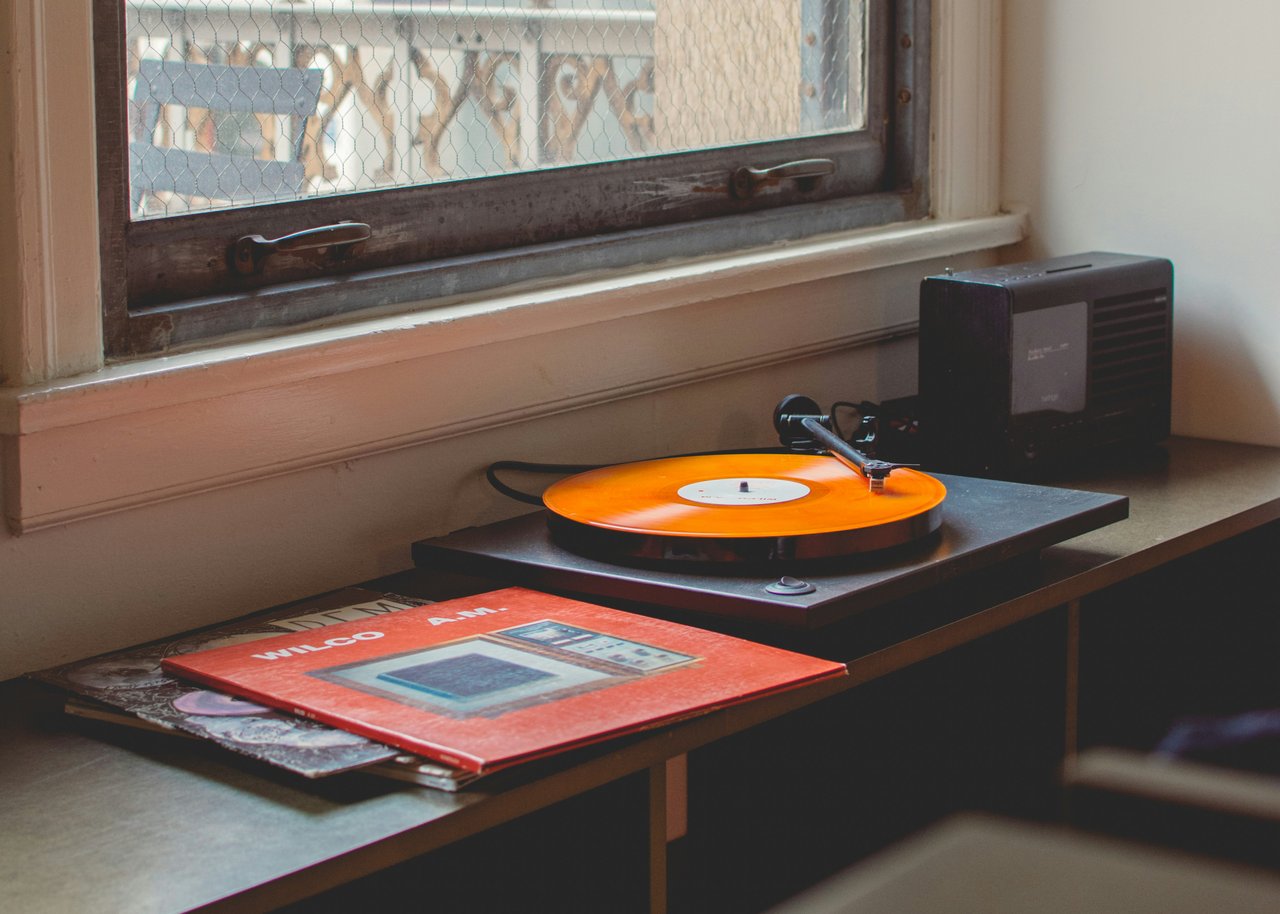
After years of digital downloads and subscriptions, people are back to actually wanting to own the books, movies, and records they love, and physical media is making a comeback.
But you need room—and the proper conditions—to store all that physical media safely and beautifully. Here’s how to ensure you can enjoy your collection for years to come.
Keep the Climate Controlled
Rule #1: Most physical media really hate moisture. And heat. And light. And a space that has any of that—or wild swings in those levels—can cause serious damage to your collection, whether it’s faded book bindings, warped records, or moldy CDs.
“Attics and garages seem like logical storage spots because they’re ‘extra’ space, but they’re actually the worst places for media collections,” says Katrina Teeple, professional organizer and founder of Operation Organization. “Temperature swings cause vinyl to warp, cassette tape to stretch or curl, and DVD cases to become brittle. Aim for a stable spot, ideally in a closet or shelving on the wall, somewhere between 65 and 75 degrees with moderate humidity.”
Don’t Overpack Your Storage
We get it—space is at a premium in every house. But squeezing every book or CD possible onto your shelves or in your bins could result in damage to your collection. “It’s important for items to get a little airflow, so consider filling bins only three-quarters full,” says Tyler Moore, founder of Tidy Dad. “This provides extra space so things aren’t tightly compressed and air can circulate.”
Consider Your Display Options
Your big decision here: Open or closed? Open storage might be preferable if you have a lot of aesthetically pleasing books or if you want to be able to easily find a record when you’re listening to music. “Vinyl records, books, DVDs/CDs can act as sentimental items, and you’re more likely to use them when they are out and you see them,” Moore says.
On the other hand, closed storage may provide more protection for your items and help reduce visual noise. Jamie Hord, founder of Horderly, recommends closed storage for most of your media. “You don’t need to keep everything visible at once,” she says. “If you have a large collection, designate a separate storage area and rotate what you display. It keeps things fun, interesting, and not overwhelming.”
Shelving tends to be the go-to option, but you can further organize your items by using baskets, bins, or stackable containers that suit your style. For some items, you may want to provide special protection. “If you have anything particularly sentimental or rare, acid-free sleeves for vinyl and archival boxes for cassettes are a small investment that goes a long way,” Teeple says. They’ll add an extra layer of protection against warping or other damage.
And don’t forget about the walls themselves as an option. “Grouping items directly on the wall can actually look really cool, almost like wallpaper, but made of DVDs, cassettes, or records,” Teeple says. “Look for wall-mounted shelving specifically designed to hold and display them this way—it leans into the retro aesthetic and turns a storage problem into a design feature.”
Decide How You Want to Organize Your Collection
The whole point of a collection of physical media is to enjoy it, and if you have to spend half an hour sorting through your collection just to find the thing you want, it makes it much harder to enjoy. There are so many ways to sort your stash—by color, by genre, or simply alphabetically. However, all our organizing experts agree that you should have each type of media separate—no mixing CDs with vinyl with books. You may want to take a little time to research your options to figure out what will work best for your individual collection.
“Next time you walk into a library or bookshop, take a moment to notice how the items are organized,” Moore says. “Vintage book stores and music stores are a treasure trove for organizational research.”
And keep in mind that you can combine multiple organization methods. “I recommend organizing records by genre first, then alphabetically by artist within each genre,” Teeple says. “It mimics how a record store is laid out, so it feels intuitive to browse your own home collection. For DVDs, you can break them down by category, like drama, rom-com, action, etc., then alphabetical by title works well. Cassettes I usually sort by artist, unless they’re mixtapes, and those I’d group separately and label by mood or era rather than trying to force them into an alphabetical system. You can even organize music by decade or era, ‘50s, ‘60s, ‘70s.”
If you’re letting other people rifle through your library or record collection, ensure that they can easily put things back correctly. “Think about how you can communicate that system to others, whether that’s labels on the outside of bins or some kind of inventory or catalog,” Moore says.
Add in Decorative Elements
For a large-ish collection, rows and rows of records, jewel cases, or books could become overwhelming. So break up the collection with a little rest for your eyes. Think plants, little pieces of art, or beautiful objects related to the collection. (For instance, I have an antique typewriter on my bookshelves.)
Keep Players Nearby
For music and movies, you’ll want to store your collection as near as possible to the tech you’ll use to enjoy it—so you may want to incorporate the player and accessories into your space. (And don’t forget about a cozy chair where you can curl up in a reading or listening nook.)
Leave Room for Additions to Your Collection
Unless you’re done collecting records and books (and realistically, who is?), you need to have a plan to manage your collection. ”Most collectors underestimate how fast a collection grows, so I always recommend leaving about 20% extra room on any shelf when you first set it up,” Teeple says. “A shelf that’s packed edge to edge has nowhere to go, and when you want to add to a category, there will be no room to place it in the correct spot.”
Have a Plan for Editing Your Media
Eventually, you may need to consider paring down your collection—or at least, finding additional separate storage for items you aren’t using as often. Like most other items, you may want to sort into categories. “When it comes to culling, I ask people to sort into still loved, hasn’t been touched in years, and duplicates or damaged copies,” Teeple says. “That middle category is usually the easiest place to make cuts. If something is more sentimental than functional, like a mixtape from an old friend, it can move into closed archival storage instead of taking up prime display shelf space.”
You may need to revisit your collection on a regular basis to ensure it meets your needs. “Decluttering a collection isn’t a one-time task,” Moore says. “Collections naturally evolve, and the goal isn’t to just accumulate stuff—it’s to actually use what you have and be surrounded by things you truly enjoy.”